


SharkSafe Barrier™ Q&A - Part 1
Everything You’ve Wanted to Ask About SharkSafe Barrier
Let’s be honest, when people hear “shark barrier,” the questions come fast.
We love these questions. They mean people care about safety, about conservation, and about doing things properly. So instead of answering them one by one in meetings and calls, we’ve gathered the most common ones here in one clear, transparent guide.
Here’s everything you’ve wanted to know about SharkSafe Barrier.

-
What Is SharkSafe Barrier?
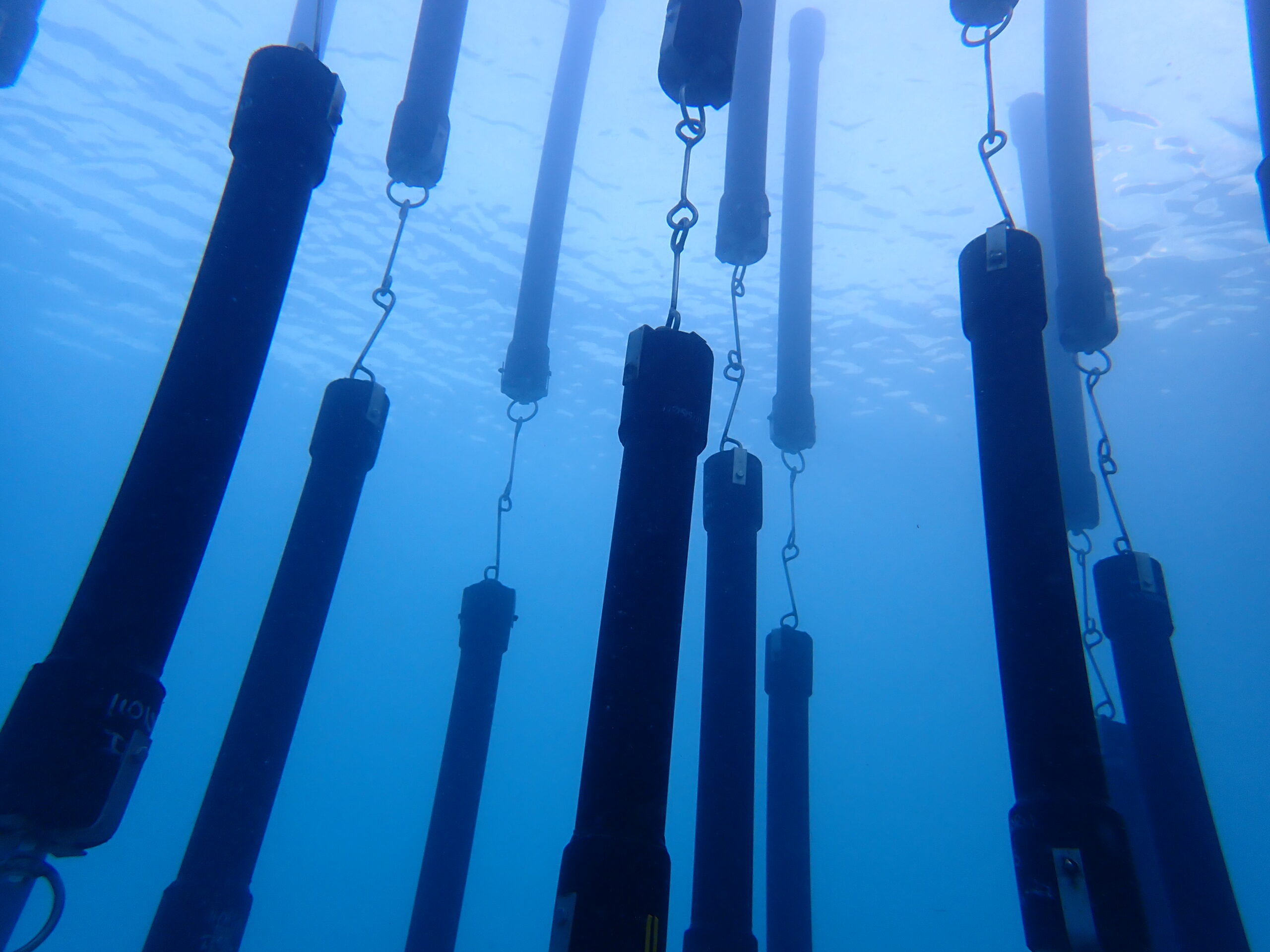
SharkSafe Barrier is a non-lethal, eco-engineered shark deterrent system designed to reduce the risk of shark encounters while allowing people and marine life to safely share the ocean. It biomimics a dense kelp forest using vertical marine-grade HDPE pipes embedded with permanent ceramic magnets. Together, these create a visual and magnetic deterrent that discourages large predatory sharks, without harming them or other marine species.
-
How does the barrier work?
The Barrier is anchored to the sea floor and combines visual deterrence (mimicking thick kelp forests) and a physical deterrence (embedded with ceramic magnets), which overwhelm shark senses and deter them. The technology has been successfully tested on bull sharks and white sharks.
-
Is SharkSafe Barrier non-lethal?
Yes, completely. Unlike shark nets and drumlines, the SharkSafe Barrier does not entangle, injure, or kill sharks or any other marine animals. It simply separates humans and sharks, allowing other marine life to move across the barrier.
-
Is it safe for swimmers, surfers, and boats?
Yes, the HDPE units are smooth and robust, the magnets pose no health risk, and boats and watercraft can pass through without damage. We do recommend clear signage and public awareness campaigns, education prevents tampering and builds community support.
-
Is SharkSafe Barrier commercially available?
Yes. SharkSafe Barrier Pty Ltd is a registered South African company with established manufacturing, export approvals, multiple real-world installations and qualified agents in Australia and the Bahamas to ease communication. While research continues to refine the technology and reduce the cost, the system is fully commercially deployable.
-
What are the pipes made of?
The vertical pipes are manufactured from High-Density Polyethylene (HDPE). HDPE is UV-resistant, corrosion-free, highly durable, recyclable and smooth, reducing fouling

-
What is the standard configuration?
The proven configuration consists of 1 sea-facing row of alternating magnetic and non-magnetic units (spaced 50 cm apart), 2 additional non-magnetic rows behind it. This three-row design has been scientifically proven to deter sharks. Additional redundancy ensures the system remains effective even if individual units are damaged.
-
Can the design prevent sharks from flanking the sides?
Yes. The system transitions from deep water toward shore. In water depths of 0–2 m, rigid SharkSafe fences are used, in 2–3 m depth, semi-rigid Hybrid Units are used, and in depths of 3–8 m, flexible units are used. This creates a continuous exclusion zone from the shoreline outward, with no easy “side entry.”
Every installation is site-specific and tailored to depth, seabed type, and wave exposure.
-
Where has SharkSafe Barrier been installed?
South Africa – Research and development prototypes were deployed in high-energy ocean conditions, including exposure to swells up to 7 metres. These installations validated the durability and shark exclusion capability of the SharkSafe Barrier.
The Bahamas – Two barriers have been installed at a private island in the Berry Islands. Reports indicate that sharks have not crossed the installed barriers.
Réunion Island – A 10 m × 10 m exclusion square was deployed at 7 m depth in collaboration with the Réunion Centre for Shark Management. Installation was completed in 9 days.
-
How does the Barrier perform in rough conditions?
The majority of durability testing occurred in Cape Town, South Africa, where strong swells and storms are common. The system has withstood 7 m swells in South Africa and remained stable during hurricane conditions in The Bahamas.
-
How does the Barrier perform in rough conditions?
The majority of durability testing occurred in Cape Town, South Africa, where strong swells and storms are common. The system has withstood 7 m swells in South Africa and remained stable during hurricane conditions in The Bahamas.
-
What is the expected lifespan?
With a proactive maintenance programme, the installation can last 10–20 years, depending on environmental conditions and maintenance frequency.
The Bigger Picture
SharkSafe Barrier is designed as a replacement, not an add-on, to lethal shark control methods.
It protects swimmers.
It protects sharks.
And it protects the long-term health and reputation of coastal destinations.
We’ll continue this Q&A series in our next newsletter, diving deeper into design, science, tourism impacts, and the future of non-lethal shark mitigation globally.
If you have pressing questions you’d like us to answer, we’d love to hear from you. Please email us directly or connect with us on LinkedIn, Instagram, or Facebook, and we’ll include your question in an upcoming edition.
The SharkSafe Barrier™ Team

SharkSafe Barrier™ Newsletter December 2025
As we reach the end of another year, we would like to take a moment to thank our partners, supporters, and collaborators for being part of the SharkSafe Barrier journey. This year has been one of learning, resilience, and continued commitment to finding solutions that protect both people and marine life.
First things first! Our second Caribbean beach has been protected by the SharkSafe Barrier since August this year. Both installations have successfully kept sharks out, while the resident manatee continues to use the bay as a source of fresh water. At the first site alone, we recorded 18 fish species using the barrier as a safe refuge. Even more encouragingly, both barriers came through the recent hurricanes completely unscathed.
This tourism destination hosts an average of 8,000 people every day, with an estimated 2.5 million visitors annually.
For the first time, peace of mind for people and respect for local sharks truly belong in the same sentence…..at least at these two beaches.
We never expected this to be a smooth ride. Scaling an innovative marine conservation technology does not come without challenges. We push for design improvement through ongoing research and field testing, while continuously engaging with coastal stakeholders.
Our greatest challenge, however, is social rather than engineering. We are not only introducing a new technology, but we are also challenging the way shark risk is managed in coastal tourism. In a world still dominated by fear-driven, quick-fix solutions, lethal shark control remains the prevailing approach in regions such as South Africa, Australia, and parts of the French overseas territories (Réunion and New Caledonia).
Replacing fear with science and outdated practices with proven, non-lethal alternatives lies at the heart of our mission.
Each installation, conversation, and trial has strengthened our understanding of client needs, operational realities, and the role SharkSafe Barrier can play in delivering safer and more sustainable coastal management.

What we have learned above all is that none of this would be possible without the continued support, belief, and collaboration of our partners, advisors, investors, and team.
Thank you for standing with us as we work towards a future where people and sharks can share the ocean more safely and respectfully.
We wish you a restful festive season and look forward to working together in the year ahead.
Warm regards,
The SharkSafe Barrier Team

Thank you for being part of our journey. Together, we are making the oceans safer for everyone.
The SharkSafe Barrier™ Team
SharkSafe Barrier™ Newsletter November 2025
SharkSafe Barrier Expands in The Bahamas with New Installation Partner SEA ME DIVE
We’re proud to announce the successful completion of our second commercial SharkSafe Barrier™ installation in The Bahamas, marking another major step forward in protecting both people and marine life.
Following the success of our first project, with two years of continuous protection, our client has once again chosen SharkSafe Barrier™ as the safe, reliable, and environmentally responsible solution. This new installation underscores the growing confidence in our technology and our shared vision of protecting coastal communities and bathers, while preserving the natural beauty of the ocean.

We’re deeply grateful to our client for their continued trust and support, and to our dedicated team for making this milestone possible. One installation at a time, we’re proving that bather protection, innovation and conservation can go hand in hand.
This project also marks the beginning of an exciting collaboration with our new Bahamian partner, Sea Me Dive, a leading commercial diving company specialising in marine construction and restoration across the U.S., Caribbean, and Central America. Their professionalism, expertise, and shared commitment to ocean conservation make them an ideal partner as we continue to expand globally.
Together, we’re expanding the reach of the SharkSafe Barrier™, providing peace of mind to coastal communities and tourism operators, while ensuring a healthier and safer ocean for generations to come.
Explore Sea Me Dive’s work at seamedive.net

Take Action: Help End Shark Nets in South Africa
Around the world, public pressure is growing against outdated and lethal shark-control measures, such as nets and drumlines, that kill endangered sharks, dolphins, turtles, and other marine species.
Despite global progress toward non-lethal, sustainable alternatives, new shark nets and drumlines are still deployed in Australia and have been proposed once again in Tinley Manor, KwaZulu-Natal (South Africa) as “the only answer to prevent shark attacks”.
Join us in calling for a more responsible future for both people and sharks by saying no to new shark nets and drumlines and yes to proven, non-lethal solutions like the SharkSafe Barrier™.
Sign the petition here to help prevent these installations and support safer, more sustainable oceans.

Thank you for being part of our journey. Together, we are making the oceans safer for everyone.
The SharkSafe Barrier™ Team

The revolutionary SharkSafe Barrier™ technology
The Garden Route Interface and Networking (GRIN) Meeting is an annual event taking place in the Garden Route of South Africa, providing a forum for researchers and practitioners (from anywhere in the world) interested in better understanding and managing (or navigating) social-ecological systems and their complex interactions and feedbacks. In this video, Sara Andreotti speaks about the journey of the revolutionary SharkSafe Barrier™ technology - from concept to commercialization.
Follow this link to watch SharkSafe Barriers™ journey - https://www.youtube.com/watch?v=t_MsBE4LnPc

SharkSafe Barrier™ Newsletter April 2025
Granger Bay Installation – One Year in the Water!
SharkSafe Barrier’s research and development site in Granger Bay, Cape Town, has officially reached its ONE-YEAR MILESTONE, and what a journey it’s been! Over the past year, the installation has braved powerful storms, relentless waves, and the unpredictable forces of the ocean—yet it has remained firmly in place, performing exactly as designed. This site was specifically chosen to test the barrier’s ability to withstand high-energy conditions on a rocky seafloor, and we’re excited to report that it has passed the test with flying colours.
This achievement is a significant win for SharkSafe Barrier™, demonstrating that the system can be securely anchored to diverse seafloor types while enduring the dynamic surf zone.
While our test is ongoing, we encourage anyone interested to visit Cape Peninsula University of Technology in Granger Bay to see what this innovative shark mitigation technology looks like!
The SharkSafe Barrier™ installation in the Bahamas is still going strong and, since August 2023, has provided peace of mind to more than 5000 beach-goers every day.
We’re excited about what’s next and can’t wait to see more full-scale barriers protecting people and sharks worldwide!

Introducing SCAR: The Shark Conservation and Research Trust
We’re thrilled to introduce SCAR: The Shark Conservation and Research Trust, a new initiative dedicated to protecting South Africa’s shark populations through innovation, education, and outreach. Sharks play a vital role in maintaining the health of our oceans, and by safeguarding them, SCAR helps preserve delicate marine ecosystems for future generations. Through strategic funding, SCAR supports groundbreaking research, forward-thinking conservation strategies, and impactful initiatives that contribute to shark protection.
At the heart of SCAR’s mission are three key pillars: Innovation, by investing in cutting-edge research and solutions to address conservation challenges; Education by supporting individuals and projects dedicated to shark protection; and Outreach by raising awareness, debunking myths and inspiring the next generation of ocean advocates. Whether you are looking to donate, collaborate, or apply for funding, SCAR is here to drive real change.
Join us in securing a future where sharks and our oceans thrive—visit the SCAR website or contact info@scarshark.com to get involved!


Shout out to the Centre Sécurité Requin for organising an international Shark Risk Management Event in Reunion Island
From March 24 to 28, 2025, Reunion Island hosted an international conference on shark risk management, bringing together 11 experts from South Africa, Australia, the U.S., Portugal, and New Caledonia. The conference was funded by the Regional Cooperation Fund and the Regional Council and aimed to enhance global knowledge, improve safety strategies, and explore innovative solutions for reducing shark-human conflict. With a packed agenda of expert discussions, field visits, and public engagement, this symposium advanced international collaboration on one of the ocean’s most pressing challenges. The conference encouraged experts to exchange insights on shark behaviour, technology-driven monitoring tools, and conservation-driven approaches, shaping the future of safer and more sustainable human-shark coexistence. SharkSafe Barrier™ was listed among the more humane technologies being used to solve the shark-human conflict, and we are looking forward to engaging more closely in the future with these kinds of events.

SharkSafe Barrier™ Newsletter December 2024
Before 2024 comes to an end, the SharkSafe Barrier™ team would like to share some exciting highlights from the year with all of you.
Research and Development
SharkSafe Barrier’s™ latest Research and Development installations at Granger Bay and Mackerel Beach mark significant milestones in testing the barrier in rough sea conditions and on different sea substrates. Situated along South Africa’s dynamic coastline, these sites were selected for their challenging marine conditions, offering ideal environments to evaluate the SharkSafe Barrier’s™ performance in real-world ocean scenarios.
The Granger Bay installation is focused on testing the durability of a prototype design for the rigid pipes anchored on rocks. Positioned in a high-energy surf zone, this site experiences strong wave action, especially during winter when northwesterly winds prevail. The harsh environmental conditions provide an excellent testing ground to evaluate how the barrier withstands the constant battering of powerful waves. Strategically located in front of the Cape Peninsula University of Technology’s (CPUT) Granger Bay campus, the installation is surrounded by the rugged rocky terrain typical of this coastline.

At Mackerel Beach, the focus shifts to assessing the effectiveness of the barrier’s interface between deep and shallow water grids when anchored on deep, moving sand and exposed to the surf. The installation here is critical for testing the transition zones in the design, ensuring the technology functions seamlessly in varying water depths. Mackeral Beach is a highly dynamic beach, particularly when the Capes’ notorious South-easterly wind blows, exposing the test sight to rough seas and sand movement.
Together, these installations are driving advancements in SharkSafe Barrier’s™ goal of creating a safer ocean environment for both humans and marine life. By continuously refining the barrier’s design to ensure large-scale feasibility, the project plays a key role in global efforts to reduce shark-human conflicts without harming marine ecosystems. A big thank you to the Nautech Team for making the ongoing R&D possible.


Envoy: Shark Cull is now on Netflix Australia and New Zealand
We are thrilled to announce that the documentary Envoy: Shark Cull was released on Netflix NZ and Australia in October! This is a monumental achievement for everyone involved in bringing the film to life and a powerful opportunity for a global audience to witness the devastating effects of long-standing shark culling practices.
Envoy: Shark Cull, directed by Andre Borell and narrated by Eric Bana, features prominent voices in marine conservation, such as Sea Shepherd, Ocean Ramsey, and Madison Stewart, and one of SharkSafe Barrier’s™ founders, Dr. Sara Andreotti.
The film unveils seven years of covert footage, exposing the harsh reality of Australia’s ongoing shark culling program. It emphasizes the crucial role sharks play in our marine ecosystems and presents humane alternatives for mitigating shark-human conflict including the SharkSafe Barrier™.
In New South Wales, Queensland, and KwaZulu-Natal, shark nets and drumlines are deployed just 500 meters from the shore, supposedly to protect beachgoers. However, these devices offer no real protection. Shark nets cover only part of the water’s depth, and drumlines are merely baited hooks floating in the water. Neither method forms a physical barrier between sharks and humans, allowing sharks to swim above or below them. Tragically, these devices entangle and often kill a wide range of marine species, including turtles, dolphins, whales, and non-target shark species.
There are more compassionate and effective solutions. The SharkSafe Barrier, for instance, simulates the natural deterrent effect of kelp forests combined with magnetic fields, effectively discouraging sharks from entering certain areas—without harming them or other marine life.
If you’re in Australia and New Zealand, don’t miss this documentary on Netflix during this festive season.

As 2024 draws to a close, we at SharkSafe Barrier™ want to extend our deepest gratitude to our supporters, partners, and passionate team who have made this year remarkable. As we look ahead to 2025, we remain committed to innovating and growing our impact. Thank you for being a part of our journey—here’s to a safer, thriving ocean for all!
SharkSafe Barrier™ Newsletter - August 2024
A year in the Bahamas!
We are incredibly thrilled to celebrate the first anniversary of the SharkSafe Barrier installation in the Bahamas! Over the past year, our SharkSafe Barrier™ has demonstrated its effectiveness in separating sharks and humans, while safeguarding the integrity of the marine ecosystem.
This achievement marks a significant milestone for marine conservation, showcasing how effective, eco-friendly alternatives to mitigating the shark-human conflict are now a real option!
The installation sustained severe storms, proving the technology’s robustness despite the ocean’s unpredictability.


Our clients in the Bahamas looked into other options before adopting the SharkSafe Barrier™, but it was the only technology that ticked all their boxes. Our clients were looking for a system that would keep sharks away from the beach, that allowed for jet skis to go through it, and had minimal maintenance requirements—one year in, the SharkSafe Barrier has met all their expectations.
SharkSafe Barriers™’ vision is to provide effective and sustainable solutions to mitigate the shark-human conflict, redefining how humans interact with the world’s oceans, and this installation is a tangible testament to our vision.

SharkSafe Barrier Newsletter August 2024
A year in the Bahamas!
We are incredibly thrilled to celebrate the first anniversary of the SharkSafe Barrier installation in the Bahamas! Over the past year, our SharkSafe Barrier™ has demonstrated its effectiveness in separating sharks and humans, while safeguarding the integrity of the marine ecosystem.
This achievement marks a significant milestone for marine conservation, showcasing how effective, eco-friendly alternatives to mitigating the shark-human conflict are now a real option!
The installation sustained severe storms, proving the technology’s robustness despite the ocean’s unpredictability.


Our clients in the Bahamas looked into other options before adopting the SharkSafe Barrier, but it was the only technology that ticked all their boxes. Our clients were looking for a system that would keep sharks away from the beach, that allowed for jet skis to go through it, and had minimal maintenance requirements — one year in, the SharkSafe Barrier has met all their expectations.
SharkSafe Barriers’ vision is to provide effective and sustainable solutions to mitigate the shark-human conflict, redefining how humans interact with the world’s oceans, and this installation is a tangible testament to our vision.

SharkSafe Barrier Newsletter April 2024
Research and Development
Research and Development has been an essential component of the SharkSafe Barrier™ technology, as it allows us to continue to innovate and improve the barrier, reduce costs, and provide scientific evidence of its effectiveness. Transparent communication of research findings helps foster trust and support, which is vital to us.
SharkSafe Barriers (Pty) Ltd most recent research and development involved a deployment in Granger Bay, Cape Town. The primary objective of this is to assess the resilience and effectiveness of the prototype fence grid installed on a rocky seafloor that is exposed to high-energy waves. The testing centers on four key areas of the robustness of the system. The first is to ensure the durability and strength of the fence pipes at their base. The second is to assess the integrity of the rock anchors and their ability to withstand wave forces. Thirdly to assess the stability of the limpet block: shaped like limpets, they are designed to stay in place in strong wave action. Lastly, we have designed sleeves to add to our barrier, which allows us to modify the length of the pipes after installation.

Next time you’re passing through Granger Bay, be sure to keep a look out for our research and development, just opposite the CTUT parking lot, it will be there for the next year.
The next phase of our research and development will be a deployment at Mackerel Beach, which aims to test the robustness of a prototype design of the interface between shallow and deep-water grids within the surf zone.

Bahamas Storm
When you think of the Bahamas you generally think of idyllic beaches with calm, turquoise waters. However, much like South Africa, this postcard-perfect exterior can have its rough moments. From time to time, the Bahamas experiences strong winds, intense rainfall, and turbulent seas. This past February was one of those times and through this, the resilience and robustness of the SharkSafe Barrier™ shone brightly.
Having installed our first commercial SharkSafe Barrier™ in the Bahamas in August 2023, a storm like this was a great opportunity for the public to gain confidence in the barrier’s robustness. And that it did.
Unlike more traditional methods used to address the shark-human conflict, which are not able to withstand extreme conditions, the SharkSafe Barrier™ stood strong, and unwavering in its purpose to protect both beachgoers and marine life. Its innovative design with durability and effectiveness in mind, ensured that it remained steadfast even amidst these stormy conditions.

As we reflect on the resilience of the SharkSafe Barrier™ in these conditions, which is what years of research and development have taken to achieve, let us not forget the broader significance. Beyond SharkSafe Barriers™ immediate functions as a protective barrier, it embodies a commitment to innovation, conservation, and the preservation of our ocean environments. Beyond merely weathering the storm, it continued to fulfill its role, safeguarding marine ecosystems and a symbol of hope for sustainable coexistence between humans and the marine environment.
SSB’s COO and Marine Biologist loves diving with Sharks
Dr. Sara Andreotti is the COO, founder, and director of SharkSafe Barrier (Pty) Ltd. But she’s not your typical corporate leader. Dr. Sara Andreotti is also a dedicated marine biologist with a deep love for sharks and an adventurous spirit that drives her to dive with them whenever she gets the chance.
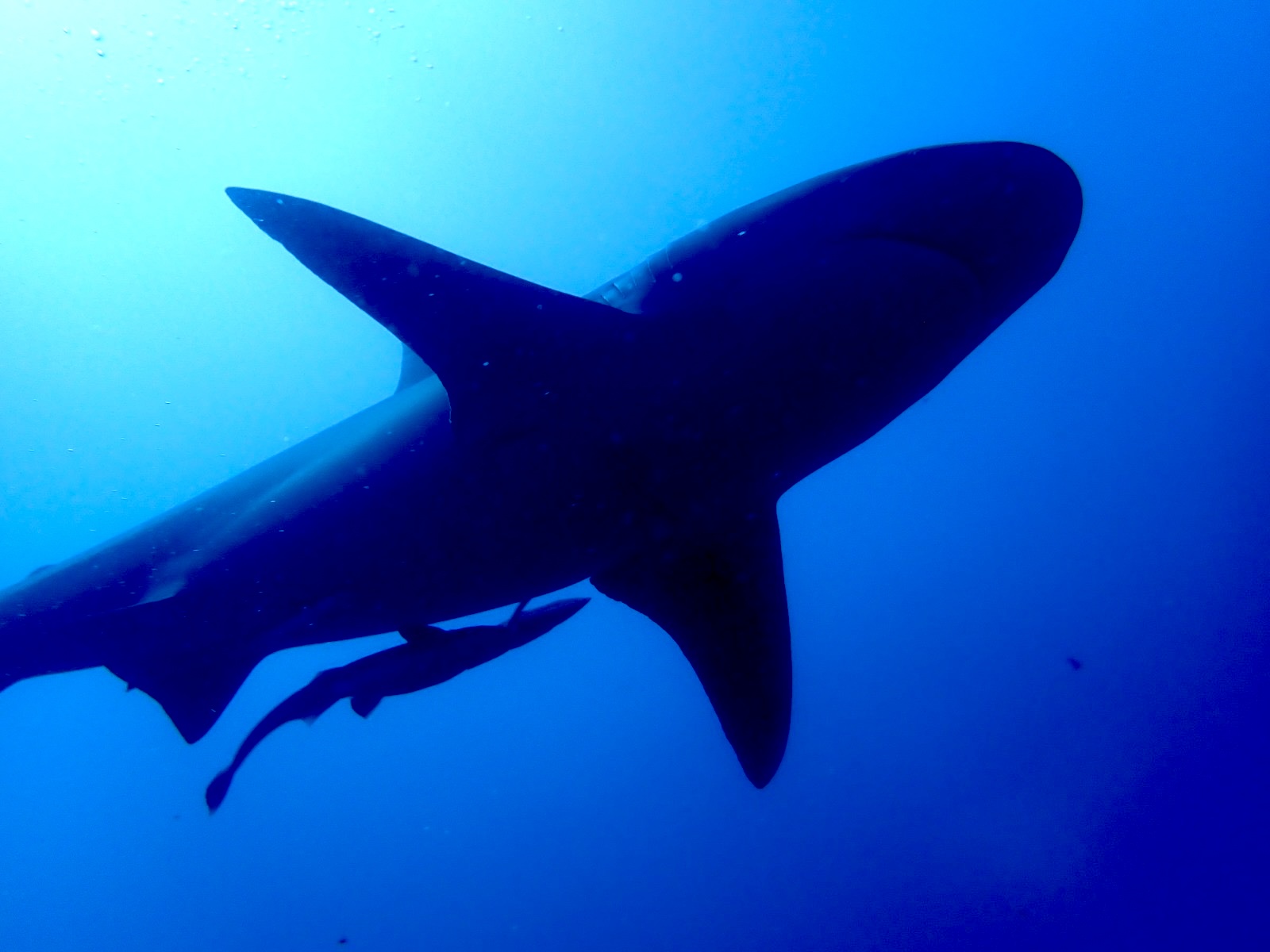
Sara diving with oceanic blacktip shark in Umkomaas, photo: Nicolene Olckers
Dr. Andreotti has always been fascinated with sharks, sparked by her curiosity about these creatures’ misunderstood nature. Through her extensive research and firsthand experiences, she has come to understand the vital role sharks play in maintaining marine ecosystems’ health and balance.
As the driving force behind SharkSafe Barrier (Pty) Ltd, Dr Andreotti’s mission is twofold: to protect beachgoers from potential shark encounters and to promote coexistence between humans and sharks. She firmly believes that fear should not dictate our relationship with these apex predators but rather our understanding and respect.
The SharkSafe Barrier™ and Dr. Andreotti’s contribution reflect her commitment to finding sustainable solutions that safeguard both human safety and marine biodiversity. With the SharkSafe Barrier™, which deters sharks without harming them, Dr. Andreotti hopes to dispel the misconceptions surrounding these creatures and foster a sense of harmony between humans and sharks.
So, next time you hear about sharks, remember Dr. Sara Andreotti and her message of coexistence.

Conservation actions for SA’s white shark population are now a matter of urgency
A group of marine biologists specialising in shark ecology, genetics, and fisheries have challenged the findings from a recent study suggesting that South Africa’s white shark population has not decreased, but simply redistributed eastwards to flee predation from orcas.
The rebuttal article published in the same journal recently, titled “Uncertainty remains for white sharks in South Africa, as population stability and redistribution cannot be concluded by Bowlby et al (2023)”, the group of concerned marine biologists highlights several issues with the methods and inferences made in last year’s study and argue that the data, as currently analysed and interpreted, cannot support the claims made about population stability, nor redistribution, of South Africa’s white sharks.
Dr Enrico Gennari, director of the Oceans Research Institute and lead author, says they felt obliged to raise these concerns given what it means for management: “If the white shark population is stable, there is no need for concern. However, if the declines in white shark sightings seen in former hotspots are actually representative of the population, then conservation action is urgently needed.” Dr Sara Andreotti, also a co-author of the rebuttal author, says they are worried about the effect of the narrative on conservation efforts: “There is no evidence of the hundreds of white sharks counted in False Bay, Gansbaai, and Mossel Bay ten years ago to be aggregating now somewhere else along the South African coastline. Our concern is that unsupported claims of population stability could jeopardise conservation actions urgently needed for white sharks,” she warns.
The group of concerned marine biologists urges authorities such as the Department of Forestry, Fisheries and Environment to take a precautionary approach in light of the declines in white shark sightings from their historical hotspots, the consequent negative impact on South Africa’s ecotourism economy, the reduction in sightings of large mature white sharks, both in the Western and Eastern Cape, the very low genetic diversity of this population, the historical and current unsustainable levels of white shark deaths from the lethal shark control program of the KwaZulu-Natal Sharks Board, and the newly exposed white shark deaths by a coastal shark longline fishery in South Africa.
Read more at: https://www.sun.ac.za/english/Lists/news/DispForm.aspx?ID=10495
See the original article:

Released April 2024

Revolutionising the concept of shark management - SUN
Wiida Basson
In this article, Wiida Basson shares more information about the SharkSafe Barrier technology, and how its design is rooted in research and inspired by nature.
Read the full article here: Open Article