

South Africa's shark spotters back in action as great whites return - BBC
Daniel De Simone
December 2023
Below are some extracts from the article published by BBC, which looks at white sharks in the Western Cape and how Cape Town’s approach to address shark-human conflict aims to protect both humans and sharks by keeping them separated.
“Conservationists actually welcome the return of the great whites as their disappearance has been a source of worry for the ecology of the waters off Cape Town”.
“Her shark safe barrier solely excludes sharks, Dr Andreotti says, meaning it does not impact other sea life, which – like people – can simply swim through it”.
“After years of testing, the barrier has recently been fitted on a private island in the Bahamas and she hopes to see it fitted in South Africa”.
Read the full article here: Open Article

SharkSafe Barrier Newsletter December 2023
As the year draws to a close, we extend our thanks for your unwavering support. The journey through 2023 has been a remarkable one for SharkSafe Barrier™, and we take immense pride in the accomplishments of our dedicated team. Here’s a recap of some important moments from 2023.

Bahamas Installation
SharkSafe Barrier™ achieved a significant milestone with the successful completion of our first commercial installation in the Bahamas. From design, manufacturing, shipment, and installation of the Barrier, this achievement stands as a testament to the collective efforts of the entire SharkSafe Barrier™ team. Special thanks go to Dr. Sara Andreotti, Eng. Laurie Barwell, our manufacturers (KND Fabrications), our clients in the Bahamas, and the continuous support from all of you.

SharkSafe Barrier™ Talks
Dr. Sara Andreotti took centre stage at various events, captivating audiences with presentations on shark conservation, research, white sharks, and the SharkSafe Barrier™. If you’re interested in hosting similar events in 2024, please feel free to reach out.
SHARK STORIES Podcast Launch
Director Anthony Mederer introduced the SHARK STORIES podcast with Dr. Sara Andreotti as his co-host, available on Cliff Central, Spotify or Apple Podcasts. The podcast of 8 episodes looks into historical shark attack tales, re-examines the facts, and explores why these incidents occurred to encourage a deeper understanding of these incredible creatures. The feedback from the audience has been incredible, and we are already planning Season 2.

Brazil Challenge Triumph
SharkSafe Barrier™ took part in the E.I.T.A! Recife, a programme that identifies challenges within the city of Recife and creates a conducive environment for connections capable of implementing innovative solutions. The challenge aimed to find solutions to reduce the risks of shark incidents on the coastline of Recife using innovative technologies. SharkSafe Barrier Pty made it through the first phase and then after a very intense online pitch session brilliantly led by our international sale and marketing manager MSc Kezia Bowmaker-Falconer, we emerged as the first-place winner in the second phase.
Réunion Island Endeavour
SharkSafe Barrier™ had the opportunity to be part of the Outre Mer French Tech Days in Réunion Island in November, where Dr. Sara Andreotti could showcase our innovation to national and international investors and ministers. Thanks to French Tech South Africa for making this possible and to La French Tech La Réunion for organising this event, which contributes to collaborations between international French Tech and African communities.
The Last Shark Documentary Premiere
The SharkSafe Barrier™ team attended the premiere of The Last Shark Documentary at the Labia in Cape Town. South Africa’s coastline is a global treasure, home to over 200 species of sharks and rays. Among these remarkable creatures is the iconic white shark, a species facing severe population pressure. This thought-provoking documentary embarks on an investigation into the disappearance of white sharks from South Africa’s coast and the persistent use of shark culling policies in Kwazulu-Natal, highlighting that there are alternatives such as the SharkSafe Barrier™. In the documentary, Dr. Sara Andreotti shares more of her knowledge and the SharkSafe Barrier™ with the viewers.
We urge anyone who loves sharks or is interested in shark and ocean conservation to watch this documentary. It is thought-provoking and reminds us that all hope is not lost; however, it also reminds us that things need to change if we are to save sharks and ultimately marine ecosystems.

Live Radio Broadcast at Toyota US Woordfees
We were invited to join Suzanne Paxton Spektrum on the RSG stage at the Toyota US Woordfees, where SharkSafe Barrier™ founders Marine Biologist Dr. Sara Andreotti and Coastal Engineer Laurie Barwell engaged in a live radio broadcast. The Toyota US Woordfees is one of the largest cultural festivals in South Africa. The festival takes place in Stellenbosch, transforming the student town as artists, attendees, and audiences collide in a celebration of theatre, music, art, film, dance, discourse, literature, and poetry.
Sustainability Commitment
To enhance our commitment to sustainability, SharkSafe Barrier™ was able to repurpose the High-Density Polyethylene (HDPE) used for a test barrier in Reunion Island thanks to the contact provided by Director Lynton Burger. MSc Kezia Bowmaker-Falconer provided the pipes to the Centre for Regenerative Design and Collaboration South Africa (CRDC SA), with assistance from our manufacturers, KND Fabrications. The CRDC SA will repurpose the pipes into an innovative eco-aggregate made from mixed plastic waste, known as RESIN8™.
RESIN8™, is a lightweight eco-aggregate that meets the needs of the construction industry while also extending the use of plastic waste. RESIN8™ is the only material derived from plastic waste that can improve the performance of structural concrete products and that has earned acceptance from the construction industry.
This collaboration exemplifies the potential for harmonising environmental conservation initiatives and embracing sustainability and circular business practices. Through initiatives like this, organisations can make a lasting impact by repurposing materials, reducing waste, and contributing to a more regenerative future.

As we eagerly anticipate 2024, we extend warm wishes for a joyous Christmas, a Happy New Year, and festive season. Here’s to a promising and impactful 2024 for SharkSafe Barrier™.

See you next year!
Released December 2023.

SharkSafe Barrier Newsletter November 2023
The SharkSafe Barrier™ is in the Bahamas!
We are very excited to finally share a significant achievement for SharkSafe Barrier™, marine conservation, human safety, and eco-tourism alike. This was a milestone for our team and for all involved in making this possible. The SharkSafe Barrier™ technology has now been installed on an island in the Bahamas and is the first shark-specific and eco-friendly mitigation of the shark-human conflict. Our nature-inspired technology is currently the only eco-friendly alternative to shark nets, which are responsible for the deaths of thousands of sharks and other marine life every year.

Following consultation with world-renowned Caribbean shark expert Cristina Zenato, areas where sharks could be swimming more often were identified, and in August this year, a 30-metre SharkSafe Barrier™ was installed at the Berry Islands, in line with the Bahamas’ shark conservation effort. In fact, in 2011, the Bahamas proclaimed the first shark sanctuary in the Atlantic Ocean, and in 2018, a Marine Action Partnership (MAP) for Sustainable Fisheries.
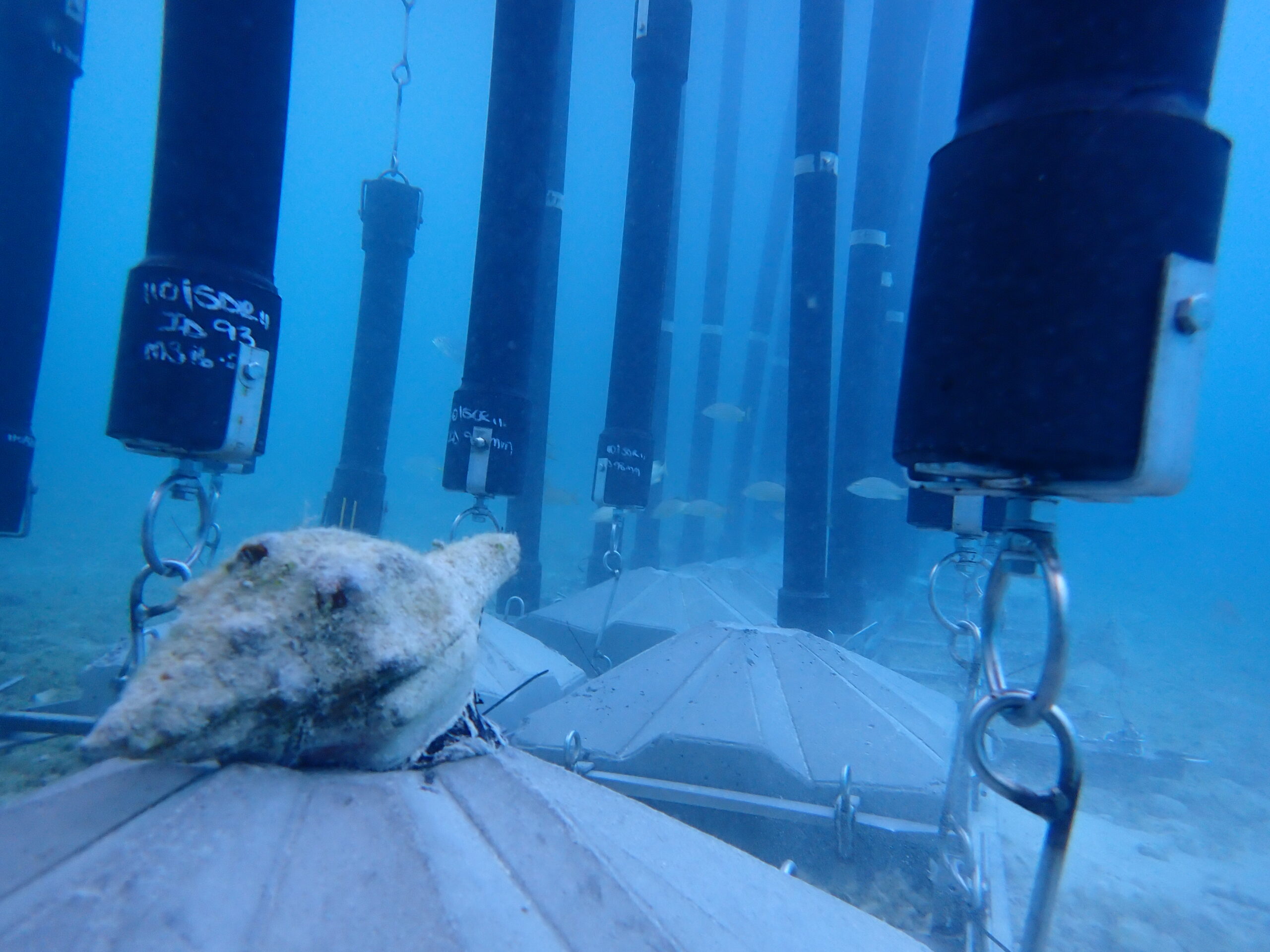
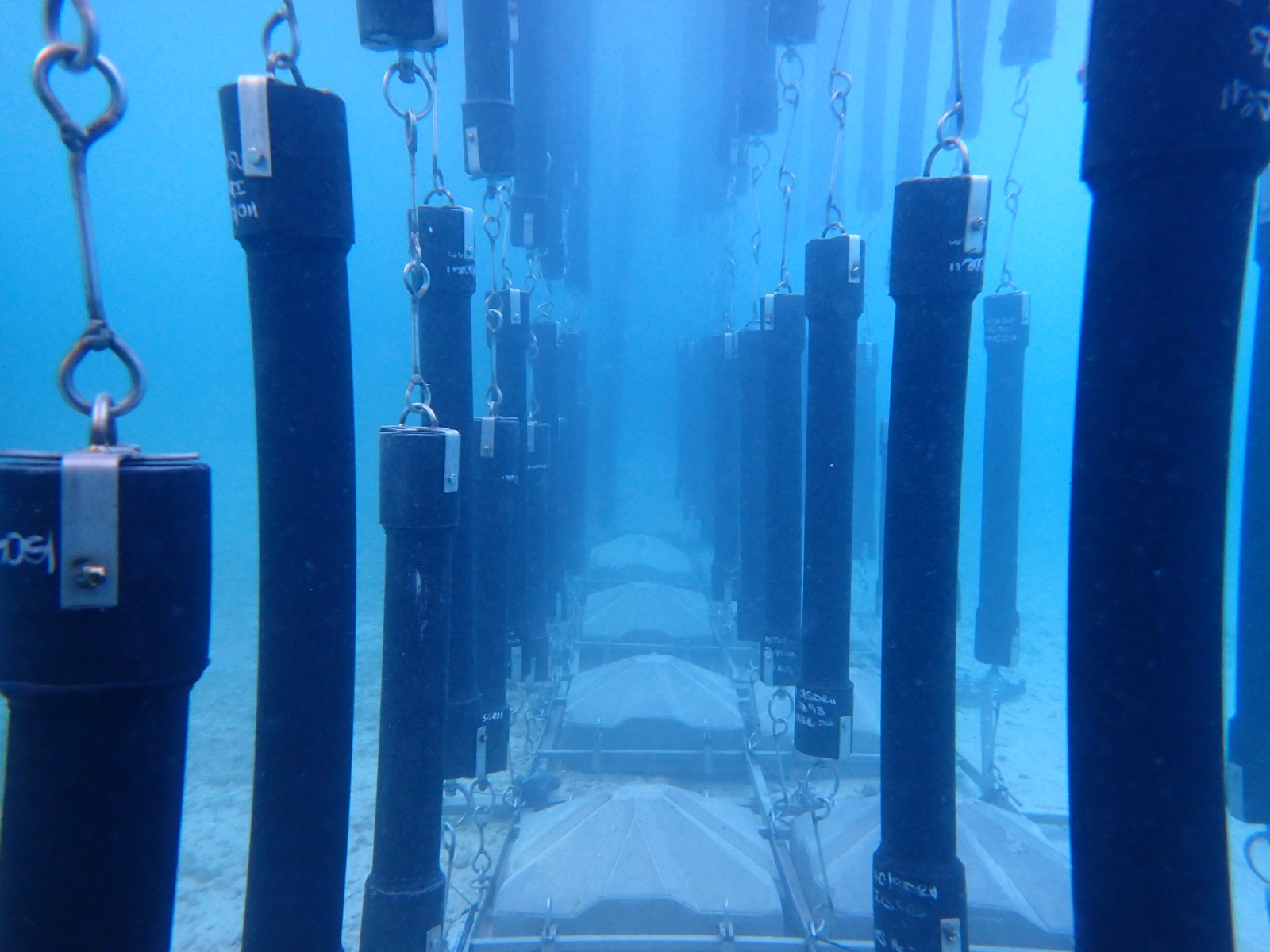
The SharkSafe Barrier™ installed in the Bahamas consists of high-density polyethylene (HDPE) pipes manufactured locally by KND Fabrications in Maitland, Cape Town. During installation, the buoyant pipes are anchored to a grid-like structure one metre apart from one another, with large ceramic magnets staggered in the ocean-facing row. The grid is then weighted by 200-kilogramme limpet-shaped cement blocks and secured by rock and sand anchors.
The materials were shipped from South Africa in July. The SharkSafe Barrier™ installation team, composed of Eng. Laurie Barwell, who supervised the land team, and Dr. Sara Andreotti, who led the underwater team, arrived at the installation site ready to receive the container within a few days of their arrival.

Unfortunately, when it comes to shipping, delays can be surprisingly frustrating, and between shipment delays and customs clearance, the materials were released two weeks after the scheduled date. But it wasn’t all bad, as the two weeks spent waiting for the materials to arrive gave the team enough time to train and prepare the installation team. Once the container arrived on the island, the team was able to install the entire structure in just six days.
On the last day of the installation, a manatee swam leisurely straight through the SharkSafe Barrier™, emphasising once again that the barrier is shark-specific and allows for marine life to thrive.

Apart from the fact that the SharkSafe Barrier™ combines two proven shark repellent strategies; it has also been designed to remain in the water for at least 20 years with minimal maintenance required. This offers an opportunity for marine life to settle on the cement blocks that anchor the barriers to the seabed, forming an artificial reef.
This is the first commercial installation of the SharkSafe Barrier™ and is the breakthrough that the team has been working towards for the past 15 years. It sets the stage for a world where safe and sustainable coexistence between humans and sharks can be a reality and paves the way for sustainable shark-human conflict mitigation worldwide. This is a win-win situation, especially for areas that rely on ocean recreation as a main source of revenue, such as beach towns in South Africa, Brazil, New Caledonia, the Bahamas, and Réunion.

Released November 2023.

These magnetic SA-made shark barriers are now used in the Bahamas - News 24
Lameez Omarjee
November 2023
“The barrier can remain in the water for at least 20 years, with minimal maintenance required. Marine life can then settle on the cement blocks, anchoring the pipes into the seabed, to form an artificial reef”.
Read the full article here: Open Article
Shark barrier tech from South Africa installed in Bahamas - Mail & Guardian
Sheree Bega
November 2023
An article published by the Mail & Guardian showcasing the SharkSafe Barrier installation in the Bahamas.
“When marine biologist Sara Andreotti and her team were in the Bahamas constructing their eco-friendly shark barrier technology from South Africa recently, a manatee came to visit”
Read the full article here: Open Article
SA-made eco-friendly barrier keeps humans and sharks apart in the Bahamas - Times
Kim Swartz
November 2023
Our Bahamas installation was featured in TimesLive.
Read the full article here: Open Article Here
Eco-friendly shark barrier technology from South Africa installed in the Bahamas - SUN
Wiida Basson
October 2023
Stellenbosch University released the first press release about SharkSafe Barriers’ (PTY) Ltd first commercial installation at a private island in the Bahamas.
“The eco-friendly SharkSafe BarrierTM technology, developed by marine biologists at Stellenbosch University (SU) and their collaborators, and manufactured in the Western Cape, South Africa, has now been installed at a private island in the Bahamas”.
Read the full article here: Open Article

SharkSafe Barrier Newsletter September 2023
SharkSafe Barrier™ collaborates with the CRDC SA
SharkSafe Barrier™ installations have a very long life span, but when it comes a time to replace our pipes, the material is either reused or repurposed!
In a bid to enhance our commitment to sustainability, SharkSafe™ Barrier are proud to announce a collaboration with the Centre for Regenerative Design and Collaboration South Africa (CRDC SA), with assistance from our manufacturers, KND Fabrications in alignment with our commitment to environmental responsibility.
This collaboration, made possible by OceanHub Africa, marks a significant step towards sustainable environmental initiatives. As the pipes used for the experimental Reunion Test of 2020 could not be reused in other installations, and we don’t need them to end up in a land field, they will be repurposed by CRDC SA to create an innovative eco-aggregate made from mixed plastic waste, known as RESIN8™.
The CRDC SA specializes in developing solutions that promote regenerative design principles. Through this collaboration, the HDPE pipes from SharkSafe BarrierTM will be converted into RESIN8™, a lightweight eco-aggregate that meets the needs of the construction industry while also extending the life cycle of plastic waste. RESIN8™ is one of the first materials derived from plastic waste that can improve the performance of structural concrete products and that has earned acceptance from the construction industry. With unique thermal properties, it is an effective building insulation product, reducing building energy use and improving climate resiliency. Further to this, concrete products made with a percentage of RESIN8™ maintains its appearance, strength, and fire resistance while the weight is reduced. In addition, tests have shown there is very little risk of leaching, abrasion, and micro-plastic release. As a recycled product RESIN8™ is fully circular, it can be-reused with a low energy production footprint. RESIN8™ is celebrated for its adaptability and eco-friendliness, making it the perfect candidate for various industries seeking to reduce their plastic waste.
This collaboration exemplifies the potential for harmonizing environmental conservation initiatives, embracing sustainability and circular business practices. Through initiatives like this, organizations can make a lasting impact, through repurposing materials, reducing waste, and contributing to a more regenerative future.
For more information about SharkSafe Barrier™, visit https://www.sharksafesolution.com
For more information about Centre for Regenerative Design and Collaboration (CRDC), visit https://crdc.global

Where have all the white sharks gone?
Dr Sara Andreotti has been working with white sharks for 16 years and has become accustomed to questions from people interested in finding out more about the subject. The most common questions she has received have always been “aren’t you afraid?”; “do you think that the megalodon is still alive?”; “what do you think about shark cage diving?” and “what is the biggest shark you have ever seen?”.
In the last couple of years or so, one question reached the top of the list: “where did the white sharks go?”.
Sara started her life in South Africa in De Kelders near Gaansbaai. Where she had ringside seats to the richness of the local marine life, which supported one of the most charismatic marine predators everyone recognises at first sight: the great white shark. White sharks were so common in Gansbaai at that time that this place was also called the white shark capital of the world! It was the only coastal town in South Africa supporting not one or two, but eight shark cage diving companies. Gansbaai had it all.
Sharks were not bay residents, but they came to visit so often that Dr Andreotti through her research could record an average of 15 different individuals on any given day. There was never a guarantee of seeing sharks but, Dr Andreotti and her team knew they would see them. In fact in 2010 they had white sharks every day they were out, and people always returned to shore with the biggest smiles.

When white sharks were around, no other species of sharks showed up and in the years Dr Andreotti was working in Gansbaai, she cannot recall seeing a single bronze whaler shark. They sporadically saw orcas in the distance and once there was a large pod passing by while the team were busy with data collection. The sharks didn’t leave, and didn’t change their behaviour.
This research involved counting the white sharks visiting the area, by identifying them one-by-one using the uniqueness of their dorsal fins. This study revealed that shark numbers were already less than were originally thought and they kept on declining steadily every year and then a worrying change in the local ecology of the bay revealed itself.
By 2018 the number of white sharks was so low that the next biggest species of sharks replaced their habitat. In False Bay they started recording sevengill cow sharks next to seal island all year round, instead of just during the summer season. And in Gaansbaai, bronze whaler sharks started swimming around the cage diving vessels.
Dr Andreotti honestly still doesn’t have a definite answer to the question “Where did the sharks go?”. But she does know that we humans can take a great deal of the blame. There are a number of things we can do to give these graceful beauties a better chance at survival. Reducing overfishing, removing shark nets and reducing bycatch are just few of the human-related solutions we should work on. Oh, and stopping the ongoing shark cull around the world would be a good start.

Released September 2023
SharkSafe Barrier Newsletter July 2023
Dear SharkSafe Barrier supporter,
We are extremely sorry for the long period of silence, but excited to announce that we will be communicating with you all more regularly from now on, with a quarterly newsletter filled with the latest SharkSafe Barrier updates and any important shark related news.
So, buckle up and enjoy.
How you can support us?
SharkSafe Barrier is happy to share with you all that there are several ways in which you can now support us, besides raising awareness.
We have established a close collaboration with a South African non-for-profit organization that is keen to raise tax deductible donations to support our conservation effort.
The Shark Conservation and Research (SCAR) Trust mission is to be active in shark conservation and training and the provision of scholarships to advance shark conservation.
SCAR is a registered Non for profit trust (https://www.sars.gov.za/businesses-and-employers/tax-exempt-institutions/approved-section18a-pbos/).
The donations are tax deductible in terms of and subject to limitations prescribed in section 18A of the Income Tax Act (only applicable for South African tax payers). Any funds received will be used for covering the expenses of shark-conservation talks, improve the research effort and increase the public outreach. If you are keen to donate to the SCAR Trust to support us, you can send a EFT to:
Acc name: SCAR TRUST
Bank: First National Bank
Acc nr: 63040292061
Branch: 200610
Swift: FIRNZAJJ
Reference: Sharksafe donation

SharkSafe Barrier can be further be supported by purchasing one of our t-shirts and caps available for sale on our website. Our t-shirts are available in blue and pink mélange, in a variety of sizes and in both a woman’s and men’s cut.
But the newest addition to our website are marine life photographs taken by Dr. Sara Andreotti during her years of field work with white sharks in South Africa. They showcase some of the breathtaking marine biodiversity we are blessed with on our South African coastline, and they are a reminder of what we are fighting for.
These HQ images can be downloaded directly from the website, where they can then be printed, framed and added to any collection. Any profits made from selling these items and any donation received go towards research for improving the SharkSafe Barrier design.
For purchasing already printed, framed and signed photographs send us an email at info@sharksafesolution.com

SharkSafe Barrier, Sara Andreotti travels to Monaco
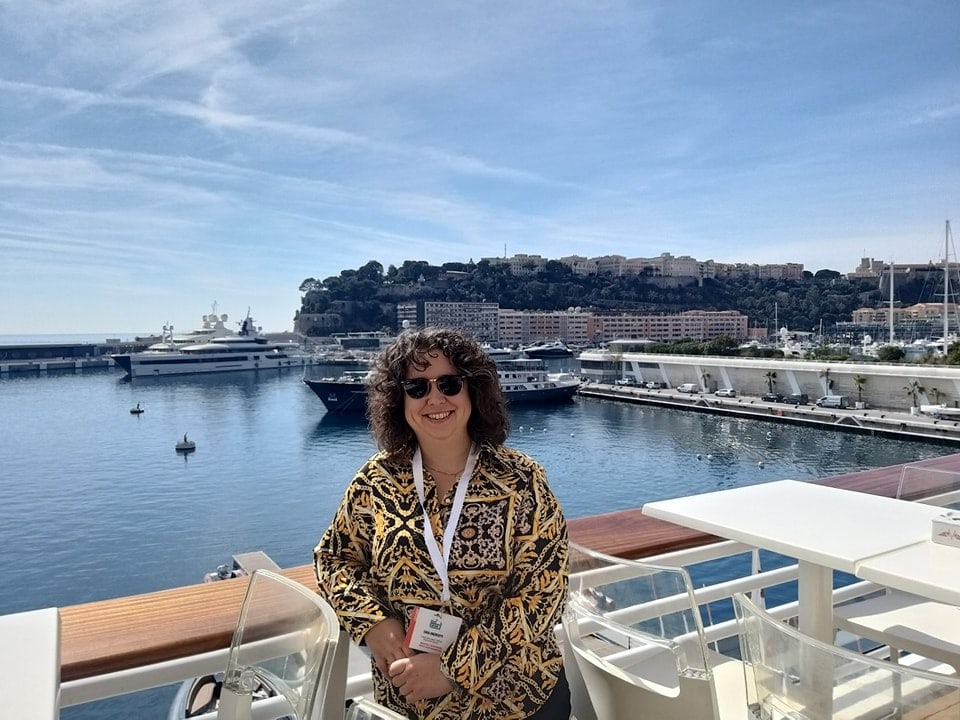
Dr. Sara Andreotti, one of SharkSafe Barriers founding directors, was invited by the Prince Albert II Foundation to attend the Monaco Ocean Week in March 2023. Dr. Andreotti participated in an Innovation Panel, which promoted our sustainable solution for protecting both humans and sharks in oceans. We were thrilled to have Dr. Sara Andreotti representing the company. SharkSafe Barrier is excited to see the positive impact that the newly announced ReOcean Fund launched by the Prince Albert II Monaco Foundation and the Monaco Asset Management will have on our oceans. The aim of this new private equity fund is to support the growth of innovative businesses that seek to reduce the main sources of pollution in our oceans, protect ecosystems and the critical services they provide, transform the way in which we produce food and travel across oceans and lastly to inform and equip ocean stakeholders with transparent and robust data.

New Caledonia resorts to shark culling due to an increased number of sharks accidents
While shark accidents are rare, they have a profound effect on local communities, marine recreation-based economies and marine biodiversity. We are devasted to hear that after three serious accidents in New Caledonia, the Nouméa municipality has launched a campaign to cull bull and tiger sharks buy fishing them out using longlines. We understand the concern for public safety but, killing these wonderful creatures is not the answer, especially when non-lethal alternatives do exist. Sharks are vital to our oceans and play an important role in maintaining balanced marine ecosystems. Control measures, such as culling are a direct threat to conservation efforts and endangered species.
Released July 2023.

SharkSafe Barrier CIV Investment
Hello, we thought you might be happy to hear some of our latest news!
We are thrilled to share the news that SharkSafe Barrier has received a $250 000 investment from Conservation Internationals CI Ventures (CIV). An Investment like this will support global shark conservation and facilitate the transition to a peaceful coexistence in areas where shark-human conflict has harmed communities, economies and ecosystems.
CI Ventures is an investment fund that provides loans to small- and medium- sized businesses that operate in forests, oceans and grasslands who are committed to practices that simultaneously benefit human-well-being and ecosystems. Through these efforts, CIV intends to protect and restore 500, 000 million hectares of land and sea while supporting 60,000 livelihoods around the world. You can learn more about the work CIV is doing here.
While rare, shark accidents and the embedded fear of them, have profound effects on local communities, marine recreations-based economies and marine biodiversity. For areas relying heavily on ocean recreation revenue, shark accidents can have extreme, adverse effects on local economies. In an effort to address public safety and protect local tourism economies, beaches globally have resorted to methods that are often ineffective, costly and environmentally damaging: shark nets and drumlines. These destructive control measures are a direct threat to conservation efforts and threatened species.
This new partnership between SharkSafe Barrier and CIV will not only support pilot projects focused on improving our technology, so that it can ultimately be installed everywhere it is needed, it also provides an opportunity for SharkSafe Barrier to tap into the CIV’s global network of like-minded organisations, accelerating our chances in bringing our technology to the world.
If you have any additional question please do not hesitate to contact us.
Thank you for your ongoing support.
Sincerely,
The SharkSafe BarrierTeam!
