

October & November SharkSafe Barrier™ News 2020
So, here is the news for October and November, with a special December edition that will be coming soon!
• The SharkSafe Barrier™ awarded the Sustainability Label from the Solar Impulse Foundation
• Webinar: Building the Blue Recovery
• SharkSafe Barrier™ in the media
• SharkSafe Barrier™ will be present at the Biom’expo 2020 in Paris
“How inappropriate to call this planet Earth when it is clearly Ocean.”
- Arthur C. Clarke -


Eco-friendly magnetic SharkSafe Barrier™ developed in South Africa - Cape Talk
John Maytham interview with Dr. Sara Andreotti | Lead Researcher at Stellenbosch University
October 2020 4:31 PM

Eco-friendly magnetic SharkSafe Barrier™ developed in South Africa could be boost for tourism and jobs - Daily Maverick
One of the world’s first eco-friendly ways to keep predatory sharks from swimmers and surfers has been developed by a team of South African experts. The SharkSafe Barrier™ bio-mimics a thick forest of kelp, which fur seals (among others) use to keep themselves safe from sharks.
The co-founder of one of the world’s first eco-friendly devices to keep sharks at bay, Dr Sara Andreotti, a marine biologist in the Department of Botany and Zoology at Stellenbosch University, explained during a webinar that the system works through barriers that consist of magnets in pipes, to which sharks are extremely sensitive.
The pipes are built from recyclable plastic.
“These magnets don’t need a power source — they are like fridge magnets, but on steroids. We have one per metre to create a magnetic field. It is shark-specific. It has no effect on other animals — in fact, it creates an artificial reef that increases the local biomass,” she said.
Other marine animals just swim right through it.
The first tests were done in South Africa and the Bahamas where great white and bull sharks were attracted with bait. None of the 84 great white sharks or 42 bull sharks swam through the barrier. The barrier does not affect marine life such as seals or bony fishes that naturally use kelp forests as effective refuge and foraging areas.

The next step was a test in Reunion, and 200 units were shipped out. Andreotti said it took four divers only nine days to install all the units in a square shape for testing. Since January 2019, it has required no maintenance and the sharks are kept away without being harmed.
“It has solved three problems at once: The human safety concern, the ongoing ecology issue associated with shark nets, and tourism.”
Reunion saw a drop of 40% in tourism after a single shark attack.
“Australia has the same problem; it has a huge impact on the economy. The idea of using a net is to kill as many sharks as possible, but it kills a lot of other creatures as well. However, it would be tragic if sharks die out under our watch.”
A big issue is that an eco-friendly shark tourism industry brings in money, but without sharks this is impossible. So they wanted to interact with sharks and see them at a diving centre as the best way to understand the fascinating creatures, “because we care for what we know”, she said.
“An eco-friendly [drive] creates jobs; there are so many activities around it, including diving. It is also educational because you teach a generation of young people to care about a healthy ocean. If you have a healthy shark population it becomes a mecca for divers,” said Andreotti.
“The challenge we now have is to change the shark-human relationship, which is not an easy task. On the bright side, we have already received several requests from overseas for installation.”
She said the SharkSafe Barrier™ can be a tool to promote more sustainable coexistence between humans, sharks and the ocean. However, times have been changing, rapidly.
“It is a fight against time.”
She told Maverick Citizen that to have such permanent installations in South Africa, a legal framework would be needed, even though it would save municipalities a lot of money in the long term because the device needs little maintenance.
“It would be ideal to have it in South Africa instead of nets.”
Andreotti said the “government in general, hates to change its ways because they have been doing something in a specific way for so long. Unless there is enough public pressure and change becomes the easier thing to do. The shark nets do not protect surfers, it just kills the animals. “Before a cost estimate can be given, we have to survey the seabed. Each place is vastly different. I don’t want to raise expectations and then the price is different, she said.
The SharkSafe Barrier™ can resist swells as high as 8m. It can be deployed at different depths — up to 12m — and can be built in any size. It allows boats and divers to pass through undeterred.
In 2012, a genetic study by Andreotti showed only between 300 and 500 great white sharks were left along the South African coastline. All sharks are extremely sensitive to overfishing, climate change, pollution and lack of food resources, as well as being targeted to keep surfers and swimmers safe.
After a highly publicised incident of conflict between sharks and beachgoers in 1936, shark nets were deployed in Australia and in 1950 South Africa adopted them too.
More recently, at Reunion and New Caledonia, sharks are being culled, to reduce their numbers in an effort to protect surfers.
“Thousands of sharks are killed in nets, but also other animals such as whales, dolphins, turtles and others,” Andreotti said.
Walter Bernadis from African Watersport Diving Centre in Umkomaas, near Durban, said the nets are “curtains of death and any animal which puts its head through it, dies”.
Drum lines and baiting are also used to attract sharks, he said.
“We have to change the attitude of people towards sharks [to be more like] the way we feel about whales, dolphins and turtles. If you kill a shark, there is not a beep on the radar.”
Bernardis has removed hundreds of hooks from the mouths of sharks, during dives.
Mike Nortje from Pisces Divers in Simon’s Town said Cape Town is a biodiversity hotspot and the kelp forests are part of that. Diving with animals is very popular and people dive and snorkel with Cape fur seals, and they often see gill sharks. Around 2015, this species began to decline because the food sources of the great white sharks started to collapse. Gill sharks are smaller sharks which are caught along the coast.
“For the balance [between great and small] to recover will require serious management and intervention,” said Nortje.
“We are on a blue planet; people should start caring, even those who don’t care, should,” Andreotti said.
Read the original article from the Daily Maveric
Eco-friendly SharkSafe Barrier™ invented in South Africa - Article from the Getaway Magazine
Posted by Anita Froneman on 9 October 2020
A new eco-friendly shark barrier system has been invented by a team of South African scientists and conservationists. This system can go a long way in protecting sharks and humans from each other, and is a viable alternative to nets which can cause more harm than good.
The barrier system, called ‘SharkSafe Barrier™’, consist of magnets – to which sharks are extremely sensitive – in pipes built from recyclable plastic. The system is modelled on natural kelp forests, which a host of animals like seals use to hide from sharks.
‘The SharkSafe Barrier™ is the first technology that was invented by bio-mimicking the habitat naturally avoided by large sharks (it creates a visual barrier between sharks and humans, by utilizing the natural instinct of sharks the avoiding entering a thick kelp forests),’ SharkSafe says on its website.
‘The addition of a strong magnetic fields adds an extra safety measure, since large magnets have proven to be strong deterrents for shark species.’
These barriers have no effects on other marine animals, they can swim right through it.
‘These magnets don’t need a power source — they are like fridge magnets, but on steroids. We have one per metre to create a magnetic field. It is shark-specific. It has no effect on other animals — in fact, it creates an artificial reef that increases the local biomass,’ Dr Sara Andreotti, a marine biologist in the Department of Botany and Zoology at Stellenbosch University told The Daily Maverick.
These barriers have come a long way in being perfected after it was first invented in 2012. They have since been trialled in South Africa and the Bahamas, with 100% success. Several units were then installed in Reunion Island in January this year.
SharkSafe Barrier™ still face many challenges before it can be successfully implemented in South Africa.
According to Andreotti, a legal framework would be needed. She added that ‘the government in general, hates to change its ways because they have been doing something in a specific way for so long. Unless there is enough public pressure and change becomes the easier thing to do.
‘The shark nets do not protect surfers, it just kills the animals. Before a cost estimate can be given, we have to survey the seabed. Each place is vastly different. I don’t want to raise expectations and then the price is different’, she said.
The team has adopted a ‘bottom-up’ approach, meaning they urge the public to show their support until eventually the government and other authorities will act and mobilise the practical resources needed to make this a reality in the country.
‘It is our mission for the SharkSafe Barrier™ to be deployed worldwide in all areas currently facing the threat of shark attacks,’ the website read. ‘We hope to see our innovation moving the world into a greener direction.
‘It is our hope that when enough people will stand with us and support the use of the SSB to protect surfers without harming the marine environment, we will get a step closer to really make this happen.’
Read the original article from the Getaway Magazine.
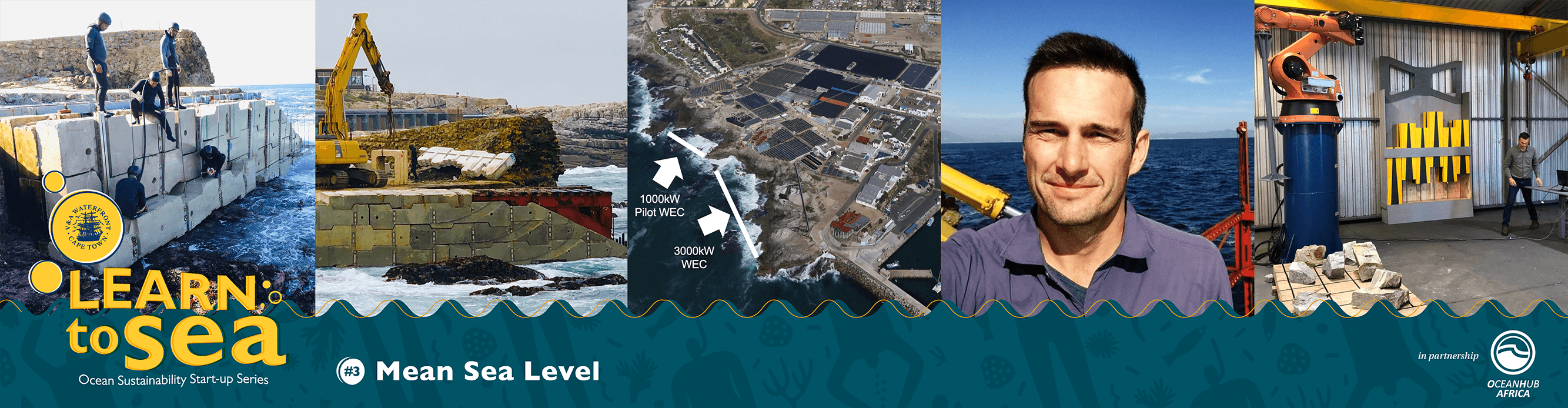
Learn To Sea
SharkSafe Barrier™ is the very first start-up showcased in the V&A Waterfront Ocean Sustainability Start-Up Series!
This work, in collaboration with the OceanHub Africa six months long acceleration program (based at the V&A Waterfront!), promotes ocean-conscious businesses wanting to create a more sustainable world.
Our story, among other inspirational South African initiatives and start-ups positively impacting our planet, are going to be presented on the #LearnToSea platform. Help us sharing the news to get more people to discover the #LearnToSea initiative and engage with it (also check out the lucky draw for an R2500 V&A Waterfront Gift Voucher).
"The SharkSafe Barrier™ provides an environmentally friendly alternative to the shark nets and drum lines that ruthlessly trap and kill sharks for the sake of keeping them away from people. Made up of vertical pipes anchored to the ocean floor, the barrier resembles kelp and uses shark-deterrent magnets to separate sharks from surfers and swimmers."
Read more about Learn To Sea...

September SharkSafe Barrier™ News 2020
September was busy! Check the latest news!
- Webinar presented by Stellenbosch University International and OceanHub Africa
- Envoy Cull Announcement
- New Photos from Reunion
- Learn to Sea Initiative V&A Waterfront
August SharkSafe Barrier™ News 2020
Hello! We are already in August! It is Shark Week!
What happened this month?
- We made the headline in The Guardian
- We won the NSTF/South32’s Lewis Foundation Green Economy award!
- The SSB Units in St Paul (Reunion) are still doing fine despite a record breaking storm!
- SharkSafe Barrier™ has been selected as one of the start-ups of the Tech4Island Program

The SharkSafe Barrier™ won the Lewis Foundation Green Economy Award!
For developing the SharkSafe Barrier™ that is the first shark specific barrier which is eco-friendly and can protect swimmers and surfers without harming the marine life.
The winners of the prestigious National Science and Technology Forum Awards were announced and the SharkSafe Barrier™ was among them!
This award honours and celebrates outstanding contributions to science, engineering and technology (SET) and innovation.
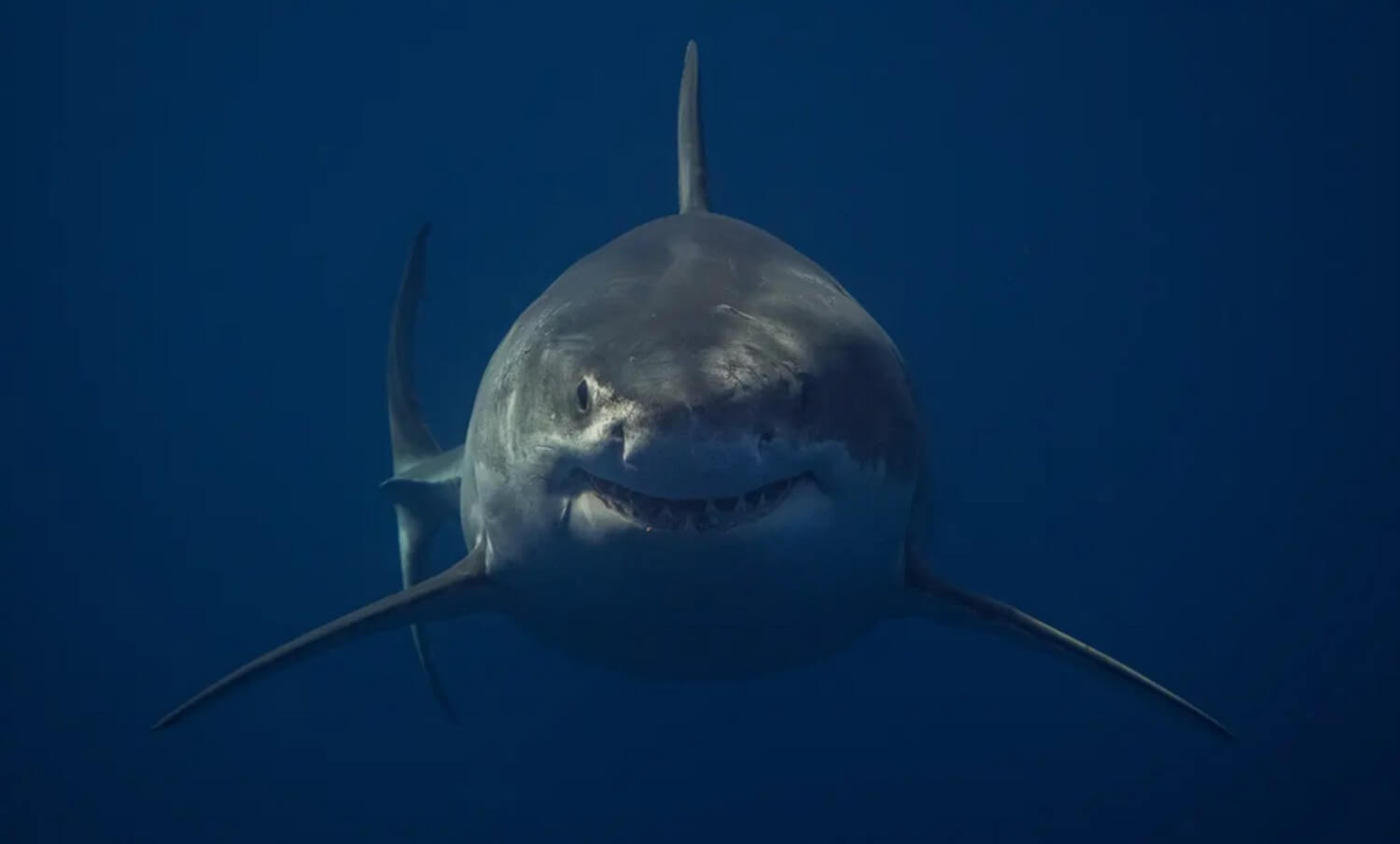
Could fake kelp prevent attacks?
As the brutality of drumlines and culling is exposed, ingenious new ideas are being trialled to protect humans from sharks – and vice versa.
In 2017, surf champion Kelly Slater responded on Instagram to the death of Alexandre Naussac, a bodyboarder who died after a shark attack: “Honestly, I won’t be popular for saying this but there needs to be a serious cull,” Slater wrote. “There is a clear imbalance happening in the ocean there … 20 attacks since 2011!?”
Réunion Island, the French overseas department in the Indian Ocean where Naussac died, did indeed see 24 shark attacks between 2010 and 2019, 10 of which were fatal. If anywhere is a shark attack hotspot, it’s here: one-sixth of recorded fatal attacks globally from 2011–2016 happened in the island’s murky water, which appeals to bull sharks but makes it harder to spot them. Overfishing has been cited as another possible reason for the high incidence of attacks, as sharks move nearer land to find food.
Slater later took back his comment – “Killing anything in hopes of a solution is not in line with my philosophies about life” – but shark culling is not a fringe opinion, particularly among surfers who spend so much time in the water. Many scientists, however, see culls as an ineffective way of protecting swimmers: the example often cited is Hawaii, where 4,668 sharks were culled between 1959 and 1976, but the number of attacks stayed the same.
Like many countries around the world, Réunion put up shark nets to try to prevent attacks around its beaches. But those nets also trap whales, turtles, dolphins and other harmless marine animals – and some shark attacks still occur. It also tried drumlines, which are designed to specifically target sharks using bait hooks; these reduce by-catch, but have been described as culling by another name. It even tried selective bans on swimming and surfing, a key element of the island’s appeal to tourists, which were mostly flouted anyway.
Now Réunion is trying a potential solution that could not only protect people from sharks, but sharks from people. The SharkSafe Barrier™, a series of vertical pipes containing magnets designed to look like a kelp forest, has been developed by a South Africa-based team of scientists and shark specialists, who have been working on it since 2011.
The idea came from Dr Craig O’Connell, a marine biologist who went to South Africa to test magnets as deterrents for great white sharks, which are protected there. South Africa had been relying on nets for protection, but at a cost: between 2013 and 2017, nearly 17 great whites died annually in nets and drumlines along the KwaZulu-Natal coast.
Sharks dislike magnets because they overwhelm a special organ of electroreceptors around their eyes and nose, said Dr Sara Andreotti, a marine biologist at the University of Stellenbosch and one of the SharkSafe Barrier™ team.
“They can detect very minute electric fields in the water,” said Andreotti of the sensory organ, known as the ampullae of Lorenzini and also found in rays. “They use it for hunting. Some scientists argue that they are using it for migration as well – they can feel the magnetic field of the Earth.
“We create a magnetic field that is too powerful for them to bear – it overwhelms this sensitive sense. Other species can swim through. They can even use the barrier as an artificial reef.”
The idea to disguise the magnets as kelp came after Michael Rutzen, a white shark behaviour specialist and film-maker, and one of the team, observed that the great whites would not enter areas with thick kelp, presumably to avoid entanglement. (Cape fur seals are often seen darting into the kelp to evade predators.)

Photograph: www.sharksafesolution.com
The team tested the barrier with bull sharks in the Bahamas and white sharks in South Africa. They set up the pipes and chummed – attracted sharks with fish guts and other parts – then filmed the sharks’ reactions. None of the sharks filmed passed the barrier to get to the fish, Andreotti said.
Two hundred pipes have been installed off Réunion, and the experiment will run until the end of the year. The authorities will then decide whether to replace the nets across the island.
One potential obstacle is cost: one 8m (26ft) section of SharkSafe Barrier™ costs about 4,000 rand (£178), which is much more expensive than netting, and the number of pipes required can be in the dozens. Its backers argue that maintenance is cheaper than nets, in part because you don’t need to clean out dead creatures – but net maintenance is also an important source of employment in many deprived coastal communities.
Scientists have been experimenting with magnets as shark repellents for several years. The University of Newcastle, in Australia, published the results of a study that showed magnets can reduce the number of sharks and rays caught as by-catch in commercial fishing.
Photograph: Richard Bouhet/AFP/Getty Images
Magnets are not the only new method being trialled. The Eco Shark Barrier, developed in Perth, Australia, uses a nylon mesh that allows small fish to pass through, but not sharks, and is tightly secured to avoid entangling larger creatures.
Adelaide’s Flinders University has been testing wetsuit material that may reduce blood loss from shark bites, using ultra-high molecular weight polyethylene fibres (UHMWPE). And the Perth-based Shark Attack Mitigation Systems designed a wetsuit in two shades to distort the shape of a swimmer to a shark’s eye.
Personal deterrents also include electrical or magnetic repellents; aerosols packed with an extract of dead shark tissue; and even a device that emits orca calls, based on how white sharks have been observed temporarily abandoning their hunting grounds when orca are present.
In Australia, the SharkSpotter system is a drone that uses AI technology to detect sharks. And South Africa’s similarly named Shark Spotters warn swimmers about white sharks in False Bay; an exclusion net is also deployed daily (most shark nets are permanent) around Cape Town’s Fish Hoek area. Spotting sharks before they can pose any trouble, where possible, can still be an effective method.

Great white vanishing act: where have South Africa's famous sharks gone?
Longline fishing, pollution, the arrival of orcas – what’s causing these crowd-drawing sharks to shun Cape Town’s waters?
For those who watch the waves, rocks and beaches for the distinctive silhouettes and dorsal fins, there is still hope. If the great white sharks are gone for now, they will return, one day soon.
Not so long ago, there were 200 or more annual sightings in South Africa’s False Bay of the most famous of sharks. The sheer numbers gathering around one island off the stunning curve of sand just east of the Cape of Good Hope and the city of Cape Town made it the “great white capital of the world”.
This year, a single shark has been seen. Last year, not one.
“We need to keep watching to work out what has changed and why, and when they may come back. For now, we are still really hopeful the sharks will return,” says Sarah Waries, of Shark Spotters, an organisation largely funded by local authorities to monitor the population of great whites in False Bay and watch over the beaches.
For Gregg Oelofse, the absence of the great whites could be the most dramatic environmental change he had seen in 20 years as a conservation biologist in the area.
“It would be a massive loss for Cape Town. They are such a big part of the environment, of our sense of place and identity here, it would be a tragedy if they never came back,” says Oelofse, head of coastal management for Cape Town.
The great whites are important for economic as well as environmental reasons. They are part of a £2bn-a-year tourist industry, as much of an attraction as Cape’s vineyards, game reserves, fine dining, or Table Mountain.
The tour companies taking visitors out in boats to view the sharks, or lowering them in cages into the sea for closer encounters, employ hundreds in a country that suffers from an acute lack of jobs.
Though there are still other sharks to view, the absence of the crowd-drawing great white is a challenge to an industry seen by some as a leading example of successful eco-tourism.
Experts began to notice the decline of the great whites about five years ago, and remain divided over the reason for their absence from False Bay. Some have suggested the arrival in 2015 of orcas, another apex predator that attacks sharks, forced even the great whites to retreat.
Two orcas, named Port and Starboard, have been seen repeatedly in False Bay, most recently last month. Carcasses of large great whites have been found with evidence that the orcas killed them for their livers.
Oelofse says that the orcas’ arrival could be a factor but not the only reason for the great whites’ absence. Instead, research suggests the population of great whites has been in freefall for many years.
Dr. Sara Andreotti, a marine biologist at Stellenbosch University who has been studying South Africa’s great whites for more than a decade, estimated in 2012 there were no more than 522 off South Africa’s coastline.
Andreotti’s research also showed that South Africa’s great whites were not sufficiently genetically diverse to cope easily with new threats.
These ranged from possible pollution – such as heavy metals entering the food chain and possibly damaging sharks’ reproductive systems – to the impact of longline fishing boats that have taken huge numbers of fish from the waters east of False Bay in recent years.
Great white sharks have been protected since 1991 in South Africa, but other shark species that provide much of their diet are not.
Andreotti says: “You cannot protect the predator without protecting its food. Sharks are not sardines. They are very slow to reproduce. You can fish but you have to do it in a sustainable way. That will be less profitable in the short term but will not crash the entire environment and the industry.”
Chris Fallows, a respected shark expert and guide based close to Cape Town, is in no doubt that longline fishing was responsible for the disappearance of the great whites.
He says the populations of two species that provide much of the food of the great whites had collapsed.
“If you stopped the demersal shark longlining then there is every chance they will come back, but not in a hurry. The marine ecosystem has been intact for millions of years and in the space of five we have laid it to waste,” he says.
Local officials have shown limited interest in the problem, though the South African department of environment, forestry and fisheries has appointed an expert panel to recommend actions needed “to properly manage and conserve all shark species found along the country’s coasts, and to guide their long-term sustainable use”.
Waries remains optimistic. She remembers how numbers of sightings dropped markedly between 2008 and 2009, before a surge in 2010 when the great whites returned almost overnight.
“It’s still early days … We keep hoping they come back soon, but soon doesn’t seem soon enough. We must just be patient,” Waries says.
Oelofse described anecdotal evidence of long periods in the past century when there may have been fewer sharks in False Bay, and says that there had “peaks and troughs” in recent decades.
“It is possible that there are bigger cycles here [over longer timespans] that we just don’t know about yet … The level of our knowledge really isn’t that strong,” he says.
“I’m hopeful the sharks will return but the longer they are gone the lower the chances seem of that happening.”
Original Article - The Guardian